AI Text to Human Converter: How It Works and Why You Need One
About 85% of marketers now use AI to create content, according to HubSpot's 2025 State of Marketing report. That's great for productivity. The problem? AI-generated text has a telltale flatness. Sentences land at the same length. Vocabulary stays safe. And AI detectors catch it almost instantly.
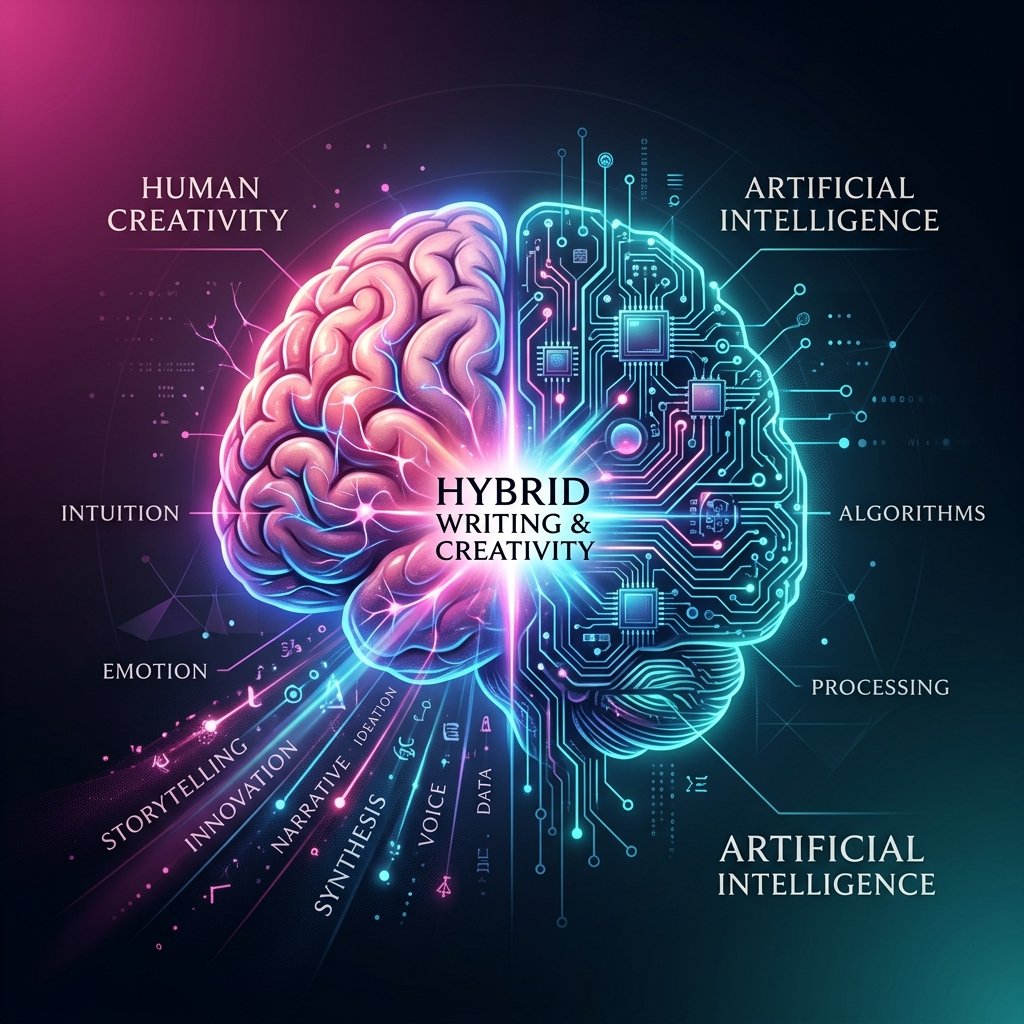
An ai text to human converter solves this by transforming machine-generated content into writing that reads like a real person wrote it. Not just swapping synonyms. Actually restructuring how the text flows, breathes, and connects.
This guide breaks down exactly how these converters work under the hood, why they've become essential in 2026, and how to pick one that won't destroy your original meaning in the process.
Key Takeaways
• AI text to human converters analyze and rewrite content at the linguistic level — not just word-by-word
• They work by adjusting perplexity, burstiness, and sentence structure to match human writing patterns
• AI detection rates are climbing: 14.8% of Turnitin submissions now contain 80%+ AI content
• The best converters preserve 90-95% of original meaning while bypassing detection
• Combining automated conversion with manual editing produces the strongest results
What Is an AI Text to Human Converter?
An ai text to human converter is software that rewrites AI-generated content so it reads naturally and passes AI detection tools. It goes far beyond what a basic paraphraser does. Where a paraphraser swaps words and rearranges clauses, a converter analyzes the deeper patterns that make text sound machine-generated — and fixes them.
Here's what separates the two. A paraphraser might change "The utilization of renewable energy sources is increasing" to "The use of green energy is growing." Same structure. Same predictable rhythm. Still reads like AI.
A proper ai humanizer converter would restructure that into something like: "Renewable energy isn't just trending — it's reshaping how entire grids operate." Different cadence. Different entry point. Different feel.
The Core Mechanics
These tools evaluate text across three dimensions that AI detectors specifically measure:
Perplexity — how predictable the word choices are. AI text scores low on perplexity because language models pick the statistically likeliest next word. Human writers don't. We use unexpected phrasing, colloquialisms, and odd word pairings. Converters inject this unpredictability back in.
Burstiness — the variation in sentence length and complexity. AI tends to produce uniform sentences. Humans write a long, winding sentence and then follow it with a short one. Like that. Converters mimic this natural rhythm.
Vocabulary diversity — AI relies heavily on a narrow band of "safe" words. Words like "utilize," "crucial," "enhance," and "streamline" appear far more often in AI text than in human writing. A good converter replaces these with more varied, context-appropriate alternatives.
If you want to understand what is an AI humanizer at a deeper level, that guide covers the full concept. Here, we're focused specifically on how the conversion process works.
How AI Text to Human Converters Work
The conversion process happens in four distinct stages. Each one targets a different weakness that AI detectors exploit. Understanding these stages helps you see why some tools produce clean output while others create garbled nonsense.

Stage 1: Tokenization Analysis
The converter first breaks your text into tokens — individual words, subwords, and punctuation marks. It then maps the statistical distribution of these tokens against known AI patterns. ChatGPT, Claude, and Gemini each have distinct token frequency signatures. The converter identifies which model likely generated the text and tailors its approach accordingly.
Token-level analysis also catches formatting habits. AI models love em dashes in specific positions, use semicolons at predictable rates, and follow comma patterns that humans rarely replicate. The converter flags all of these.
Stage 2: Pattern Detection
Next, the tool scans for structural patterns. This includes sentence-start repetition (AI frequently begins consecutive sentences with "This," "The," or "It"), paragraph structure uniformity, and transition phrase overuse. AI text loves transitions like "additionally" and "as a result." Human writers skip transitions entirely when the connection is obvious.
The detector also checks n-gram distributions — sequences of two, three, or four words. AI models produce certain n-grams at rates that are statistically impossible for human writers. A converter identifies these sequences and replaces them with naturally occurring alternatives.
Stage 3: Linguistic Transformation
This is where the actual rewriting happens. The converter applies multiple transformation layers:
Syntactic restructuring — changing sentence structure from passive to active (or vice versa), splitting compound sentences, merging short ones, and moving clauses around. The goal isn't random rearrangement. It's creating the kind of structural variety that humans naturally produce.
Lexical substitution — replacing AI-favored vocabulary with contextually appropriate alternatives. But smart tools don't just use a thesaurus. They consider register (formal vs. casual), domain (medical vs. marketing), and tone (authoritative vs. conversational) when selecting replacements.
Rhythm injection — adding the short-long-medium sentence pattern that characterizes human writing. Fragments get inserted where they work. Questions break up declarative stretches. The text starts to breathe.
Stage 4: Output Verification
The best converters run their own output through AI detection algorithms before delivering the final text. If any section still triggers detection, it gets another pass. This self-checking loop is what separates a reliable ai to human text converter from a tool that leaves you guessing.
For a broader look at the detection side of this equation, read our piece on how AI detection works. It covers the exact signals these converters are designed to neutralize.
Why You Need an AI Text to Human Converter in 2026
AI detection has gone mainstream. It's no longer a niche concern for academics — it's embedded in publishing workflows, hiring processes, and content platforms. If you're using AI to draft anything, you need a strategy for making that content undetectable.
Detection Is Everywhere Now
Turnitin's AI detection is active across over 16,000 institutions worldwide. GPTZero has processed more than 10 million documents since its launch. Originality.ai is the default checker for dozens of content agencies and publishing houses.
The numbers tell the story. According to Turnitin's own 2026 data, 14.8% of student submissions now contain 80% or more AI-generated content. That's nearly one in seven papers. Institutions are responding by making detection checks mandatory, not optional.
Academic Use Cases
Students who use AI as a research and drafting tool face a real dilemma. The ideas might be theirs. The research might be thorough. But if the final draft reads like ChatGPT wrote it, automated systems will flag it. A converter helps bridge that gap — turning AI-assisted drafts into text that reflects the student's voice.
This matters because AI detection tools produce false positives. Research from Stanford found that some detectors falsely flag non-native English speakers at higher rates. Converting AI-drafted text helps everyone submit with confidence. For specific tips on academic content, see our guide to humanize ChatGPT essays.
Professional and Content Creation Use Cases
Content marketers face a different version of the same problem. Google's guidelines don't penalize AI content explicitly, but the search engine's algorithms increasingly reward content that demonstrates experience and expertise — qualities AI text lacks. Running AI drafts through a converter adds the human texture that both readers and algorithms respond to.
Freelance writers use converters to maintain their voice across AI-assisted projects. Agencies use them to ensure client deliverables pass originality checks. PR teams use them to make sure press releases don't trigger newsroom AI detectors. The use cases keep multiplying as detection gets more aggressive.
What to Look For in a Good AI Text Converter
Not all converters deliver equal results. Some strip meaning while chasing undetectability. Others barely change the text. Here's what actually matters when you're choosing a tool to convert ai text to human writing.
Meaning Preservation
The most important criterion. A converter that makes text undetectable but changes the meaning is worse than useless. Look for tools that preserve 90-95% of original meaning. Test this yourself — run a factual paragraph through the converter and check whether dates, statistics, and claims survive intact.
Detection Impact
A good ai text converter should consistently score below detection thresholds on Turnitin, GPTZero, and Originality.ai. No tool hits 100% bypass every single time, but the best ones manage 85-95% success rates across multiple detectors. Be wary of tools that only test against one detector — passing GPTZero doesn't mean you'll pass Turnitin.
Tone and Style Matching
Some converters produce a single output style regardless of input. That's a problem. Academic writing should stay academic after conversion. A blog post should still sound like a blog post. The best tools let you specify tone — or they detect it automatically and match it.
Speed and Language Support
Processing time matters when you're working with long documents. Top-tier tools convert 1,000 words in under 30 seconds. They also support multiple languages without degrading quality. If you write in Spanish, French, or German alongside English, check that the converter handles multilingual content well.
We've compared leading options in our review of the best AI humanizer tools available right now.
Manual vs. Automated Humanization
You have two paths to make AI text sound human: do it yourself or let a tool handle it. Both work. Neither is perfect alone. The best approach combines them.
Manual Humanization
Pros: You control every word. Your personal voice comes through. No risk of meaning distortion. You can add anecdotes, opinions, and lived experience that no tool can fabricate.
Cons: It's slow. Rewriting a 2,000-word AI draft by hand takes 45-90 minutes. You need a strong sense of what AI detection looks for, and you might miss patterns that algorithms catch. It also doesn't scale — if you're producing ten articles a week, manual editing becomes a full-time job.
Automated Conversion
Pros: Fast — most tools process 2,000 words in under a minute. Consistent results across large volumes of content. Built-in detection testing. No learning curve for understanding AI patterns.
Cons: Occasional meaning drift. Output sometimes needs a human touch to sound truly natural. Over-reliance can make your content feel generic even if it's technically undetectable.
The Combined Approach
Start with an AI draft. Run it through a converter to handle the heavy lifting of pattern disruption. Then do a manual pass to inject your expertise, fix any meaning shifts, and add the personal elements that make content genuinely valuable. This workflow cuts humanization time by about 70% while producing results that are both undetectable and authentically useful.
For step-by-step guidance on the manual side, our tutorial on how to humanize AI text walks through the process.
Common Mistakes When Using AI Text Converters
Even the best converter can't fix bad habits. These are the errors that trip up both beginners and experienced users — and they're all avoidable.
Over-Processing the Text
Running text through a converter multiple times doesn't make it more human. It makes it worse. Each pass introduces more substitutions and restructuring. By the third or fourth run, the text often loses coherence. One pass through a quality tool is almost always enough. If the output still triggers detection, try a different tool rather than re-running the same one.
Not Reviewing the Output
Converters are good, but they're not perfect. They occasionally replace a technical term with an incorrect synonym. They might restructure a sentence in a way that changes a conditional statement into an absolute one. Always read the converted text before publishing. Treat the converter as a starting point, not a final step.
Ignoring Context and Audience
A medical article needs different humanization than a social media post. If your converter has tone settings, use them. If it doesn't, adjust the output manually. Content that's been humanized with the wrong tone feels just as off as AI-generated text — it's human-sounding, but it's the wrong human.
Treating Conversion as a Replacement for Editing
A converter changes how text sounds. It doesn't improve the ideas, fill in missing evidence, or strengthen weak arguments. If your AI draft has structural problems — poor organization, unsupported claims, missing examples — those problems survive the conversion process. Edit for substance first. Convert for style second.
Using Converters on Already-Human Text
If you wrote something yourself, don't run it through a converter "just in case." You'll strip out the genuine human patterns that make your writing yours. Converters are designed to add human-like patterns to AI text. Applying them to human text often makes it sound less natural, not more.
Frequently Asked Questions
What is an AI text to human converter?
An AI text to human converter is a tool that rewrites AI-generated content to sound naturally human. It adjusts sentence patterns, vocabulary, and rhythm so the output passes AI detection tools like Turnitin, GPTZero, and Originality.ai while preserving the original meaning.
How accurate are AI text converters?
Good AI text converters preserve 90-95% of the original meaning. Quality varies by tool. The best ones use contextual understanding rather than simple synonym swapping, which keeps facts intact while changing sentence structure, tone, and word choice.
Can AI text converters bypass Turnitin?
Top-tier AI text to human converters can reduce Turnitin AI detection scores significantly. No tool guarantees 100% bypass every time, but the best converters bring scores below detection thresholds by restructuring syntax and varying linguistic patterns.
Are AI text to human converters free?
Many AI text to human converters offer free tiers with word limits, typically 500-1,000 words per use. Premium plans unlock higher limits, batch processing, and advanced humanization modes. Tools like Text Humanize offer free access with no login required.
Is using an AI text converter considered cheating?
It depends on context and institutional policy. Using a converter to polish AI-drafted content you'll review and edit is similar to using Grammarly. Submitting fully AI-generated work as your own without disclosure may violate academic integrity policies. Always check your institution's guidelines.
Make Your AI Content Undetectable
AI text to human converters have moved from niche tools to everyday necessities. As AI detection gets more sophisticated, the gap between raw AI output and publishable content keeps widening. A good converter bridges that gap quickly and reliably.
The key is choosing the right tool and using it correctly. Preserve meaning. Don't over-process. Always review the output. And combine automated conversion with your own editing for results that are both undetectable and genuinely worth reading.
Ready to see the difference yourself? Try Text Humanize free — no signup needed. Paste your AI text, hit convert, and see how it reads when it sounds like you wrote it.